I · Heroine
I · Heroine · The Face of the Factory
USA · 1943 — 1971

Edie Sedgwick

"In the future, everyone will be world-famous for fifteen minutes." — Andy Warhol, 1968


Edie Sedgwick, Screen Test, Andy Warhol, 1965
Screen Test · Andy Warhol · 1965

Edie Sedgwick was born on April 20, 1943 in Santa Barbara, California. The seventh of eight children. The family was Old New England — her father, Francis Minturn Sedgwick, nicknamed Fuzzy, had studied at Harvard, raised cattle, sculpted, and was known as the local eccentric.

Behind the facade was something else. Fuzzy was mentally unstable — and cruel. He broke several of his children before they were grown. Edie's brother Francis Jr. would die in 1964. Her brother Minty — in 1965. Both — while Edie was at the peak of her fame in New York.

Her childhood was split between California ranches and the East Coast. By seventeen, Edie had anorexia and had suffered a breakdown.
From Silver Hill, Edie moved to Cambridge, Massachusetts — closer to Harvard. She studied sculpture, rode horses, lived in a small studio on Battle Street. There she met Chuck Wein. He would be one of the people who brought her into the Factory.

In early 1964, her maternal grandfather died. Edie inherited a sum — by various accounts, between $80,000 and $100,000. She moved to New York.

IV · 1965 — 1966

She was the movie

Andy Warhol wasn't looking for actors. He was looking for people so completely themselves that the screen became a document. When he saw Edie in February 1965, he knew he had found the next year of the Factory.

1965 · February

The Meeting

At Tennessee Williams' birthday party, Edie meets Warhol. Within weeks she's at the Silver Factory. Warhol: "She was incredible on camera."

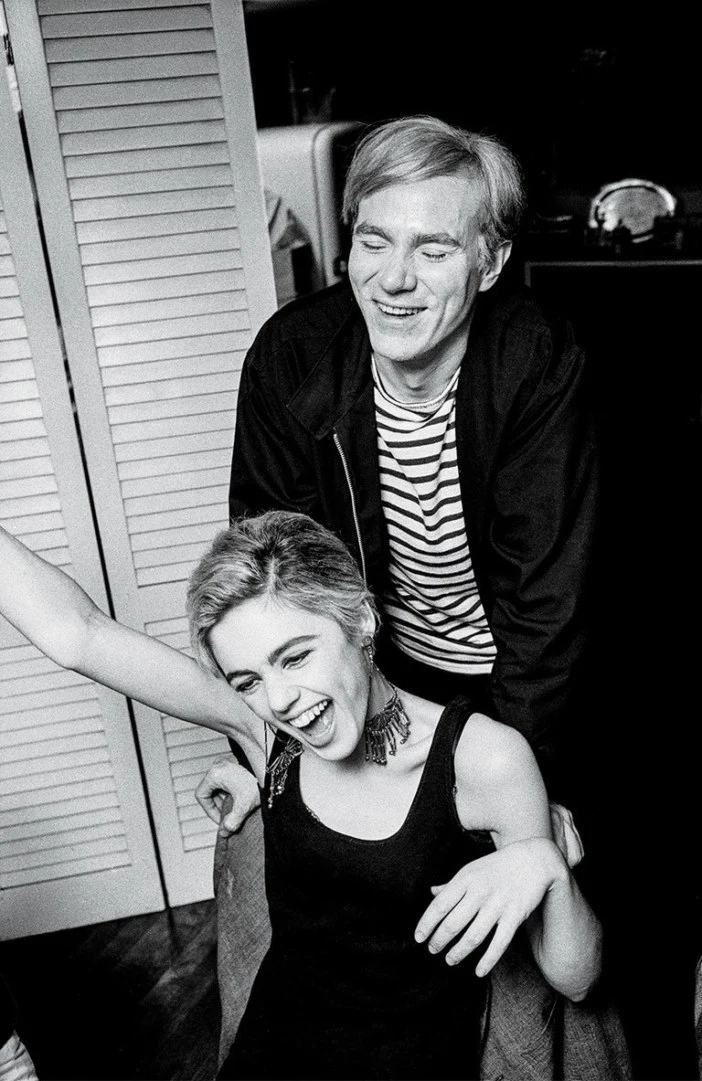
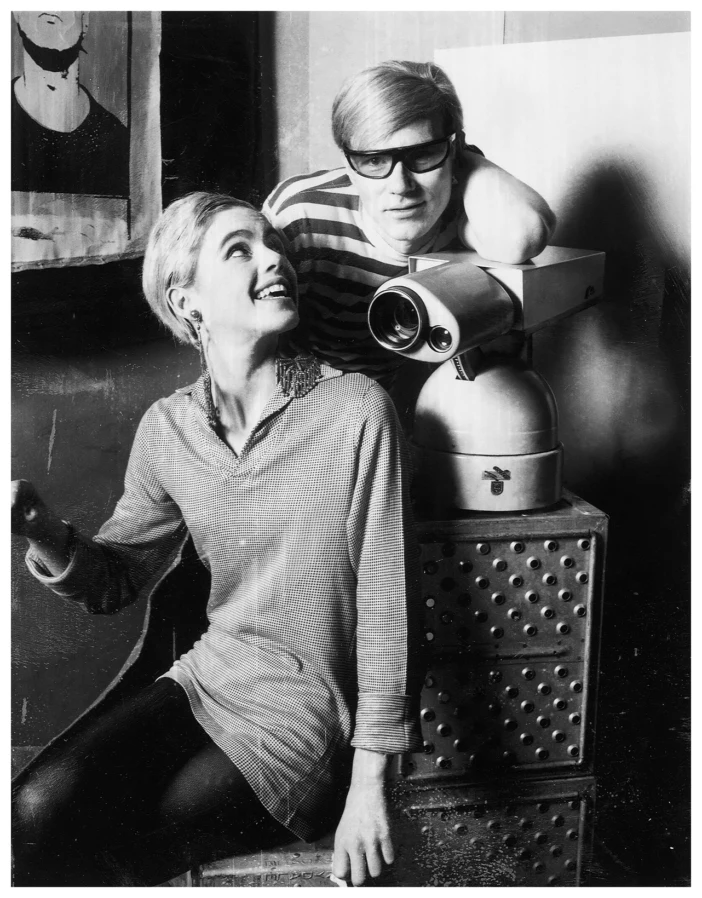
Edie Sedgwick and Andy Warhol, the Factory, 1965
The Factory · 1965

First Year

Warhol filmed her every day. By year's end she would be in eight of his films.

Edie and Warhol · the Factory · 1965
1965 · Spring

First Films

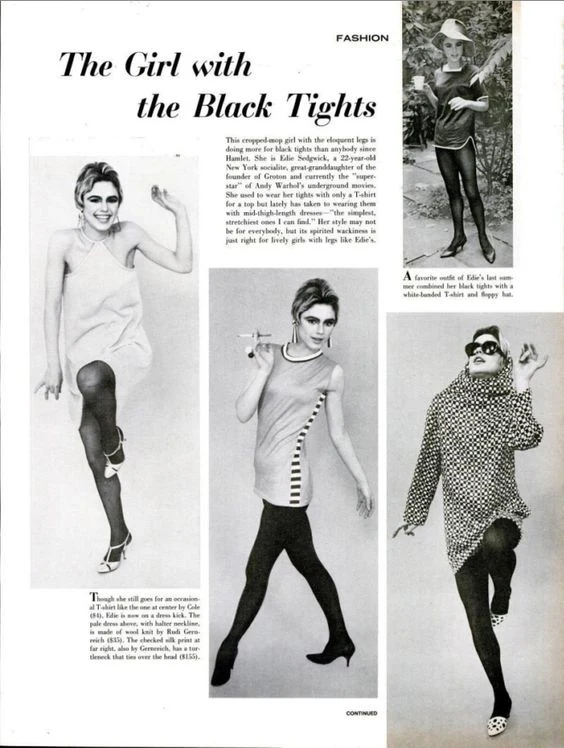
"Poor Little Rich Girl" — Warhol films Edie waking up, getting dressed, talking on the phone. No plot. Just her. Five months later — a spread in Life.

Life magazine, The Girl with the Black Tights, 1965
Life · November 1965

"The Girl with the Black Tights"

"22-year-old New York socialite... currently the superstar of Andy Warhol's underground movies."

Life · spread · November 1965
1965 · Summer

Earrings

Edie puts together the look she'll be recognized by at a glance: silver hair (like Warhol's), black tights, a mink coat, chandelier earrings. By the earrings, Warhol said, you could tell what mood she was in.

Edie Sedgwick with chandelier earrings, the Factory, 1965
The Factory · 1965

Style

Edie didn't learn how to dress from Warhol — she taught him. Before her, he wanted to be stylish but didn't know how.

Edie and Warhol · the Factory · 1965
1965 · November

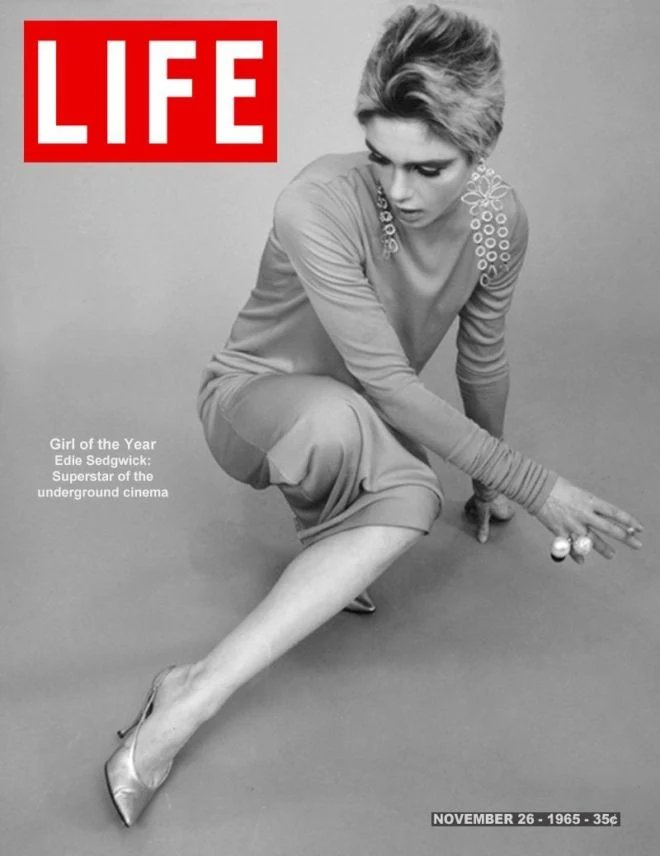
Girl of the Year

Cover of Life: "Edie Sedgwick: Superstar of the underground cinema." America's first official "It Girl." By then her grandfather's inheritance was almost gone.

LIFE magazine cover, Girl of the Year, November 1965
Life · November 26, 1965

Girl of the Year

Eight films in a year. Covers of Vogue and Life. Her name on every tongue in New York.

Life · cover · November 1965

Edie spoke about it without illusions — years later, when the Factory was already behind her.

"Andy Warhol is a businessman. I was a product."

Edie Sedgwick · interview with Jean Stein · 1971

1966

Nico

Christa Päffgen — Nico — arrives at the Factory. Warhol's new muse, the new voice of the Velvet Underground. Edie's place is taken. Warhol would later say: "She had more problems than anyone I ever knew."

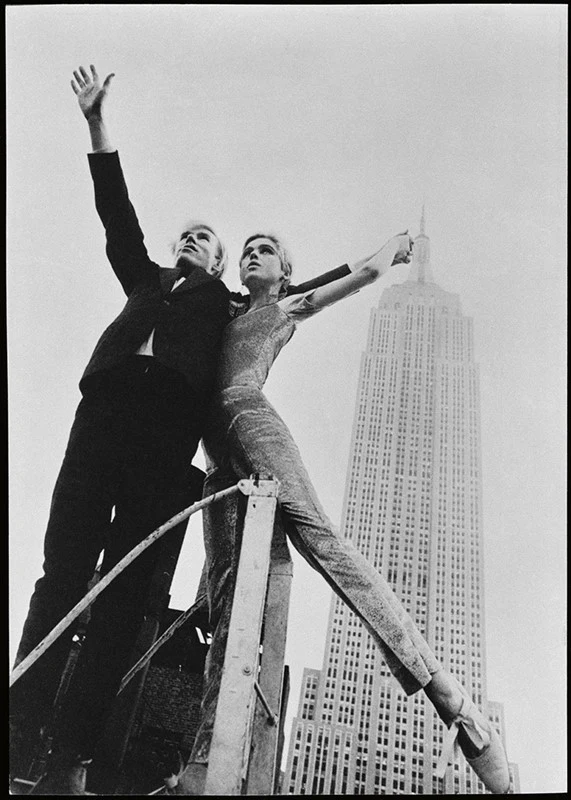
Edie Sedgwick and Andy Warhol in front of the Empire State Building, 1965
New York · 1965–1966

The Summit

One of the iconic images of the pair. Within months Edie would leave the Factory.

Edie and Warhol · New York · 1965

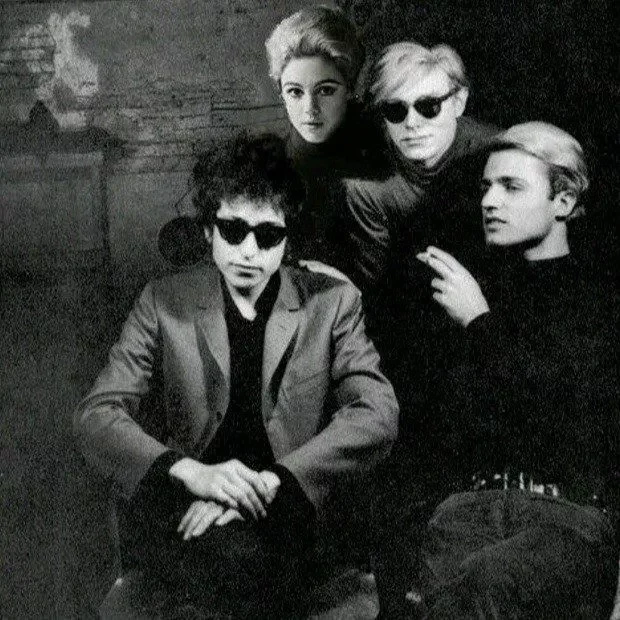
While Edie was at the peak of the Factory, she met Bob Dylan. The connection was brief and poorly documented. Some biographers believe "Just Like a Woman" was written about her. Dylan never confirmed it.

Edie believed they were going to work together — that he would help her start a music career. It never happened. At the end of 1966, Dylan crashed his motorcycle and disappeared from public life for a year and a half.

Edie lost the Factory and Dylan at the same time.

Bob Dylan, Edie Sedgwick, Andy Warhol, 1965
New York · 1965–1966

The Triangle

Dylan on the left, Warhol on the right, Edie between them. The composition of the frame is the map of her next year.

Dylan, Edie, Warhol · 1965

I never was part of the plan.

Edie Sedgwick · interview with Jean Stein · 1971

In 1966 a fire broke out at the Chelsea Hotel — Edie lost everything in her room. It was the second time fire had destroyed her home. She moves, changes addresses, loses money. The inheritance is long gone.

In 1967 filming begins on "Ciao! Manhattan" — Edie plays herself in the bohemian world of New York. The shoot stalls: she can't work consistently. The film will be completed in 1972 — after her death — with additional footage from 1970. The difference between the two periods is visible to the naked eye.

The amphetamines give way to barbiturates. She returns to California.

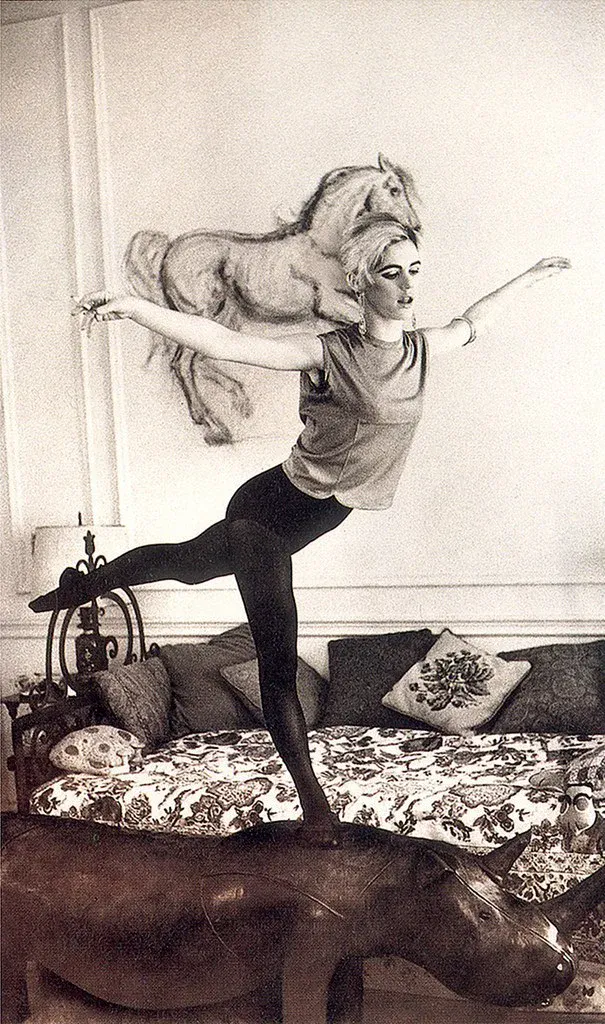
Edie Sedgwick, late 1960s
Edie Sedgwick · late 1960s

In Motion

A ballerina on one leg, in front of a painting of a horse. Trying to work — shoots breaking down. By 1970, on the film "Ciao! Manhattan," she looks entirely different.

Edie Sedgwick · late 1960s

In 1971 Edie is in Cottage Hospital in Santa Barbara. There she meets Michael Brett Post — another patient. On July 24, 1971, they marry.

In November she attends a fashion show in Santa Barbara — one of her last public appearances. She looks well, almost calm.

On the night of November 15–16, 1971, Edie Sedgwick dies. She is twenty-eight years old. The official cause: acute barbiturate intoxication. The coroner recorded "possible suicide" — the conclusion remained inconclusive.

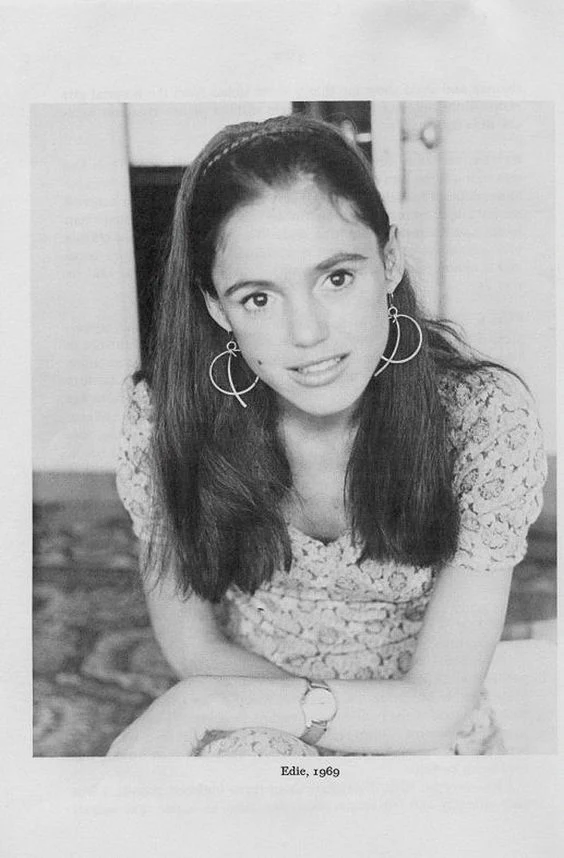
Edie Sedgwick, 1969
Edie Sedgwick · 1969

After

Dark hair, hoop earrings. After the Factory, after Dylan, after the barbiturates. Two years until her death.

Edie Sedgwick · 1969

"Edie: An American Biography" was published in 1982. Jean Stein spent years interviewing everyone who knew Edie — Warhol, friends, her sister, the Factory crowd — and assembled their voices without any narration of her own. Hundreds of memories, often contradicting each other. It remains the definitive document of Edie's life.

Silver hair, chandelier earrings, black tights — she invented this image herself. It's still quoted today.

Her style outlived her by decades.

1943 — 1971
Muses · 1960s · CHAOS

Muses is an independent editorial and educational project. Non-commercial use. All photographs are the property of their respective rights holders.

Sources: Wikimedia Commons (public domain), The Andy Warhol Foundation for the Visual Arts, Nat Finkelstein Estate, Smithsonian National Portrait Gallery, Minnesota Historical Society, F. Scott Fitzgerald Archives.

Images used for editorial commentary on cultural figures. For attribution or takedown requests: hello@slowread.art.