Jane was born in 1839 in Oxford, into the family of a stableman and a laundress. Little is known of her childhood: the family lived in poverty, the parents were illiterate. Jane and her sister went to the theatre — and it was there that the Pre-Raphaelites saw her.
I
·
Heroine · The last muse of the Pre-Raphaelites
Jane Burden Morris
“It’s hard to say whether she’s a grand synthesis of all the Pre-Raphaelite pictures ever made — or they a ‘keen analysis’ of her — whether she’s an original or a copy.” — Henry James, 1869
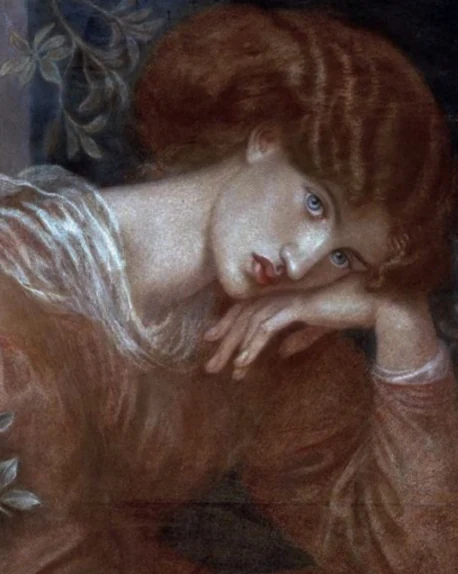
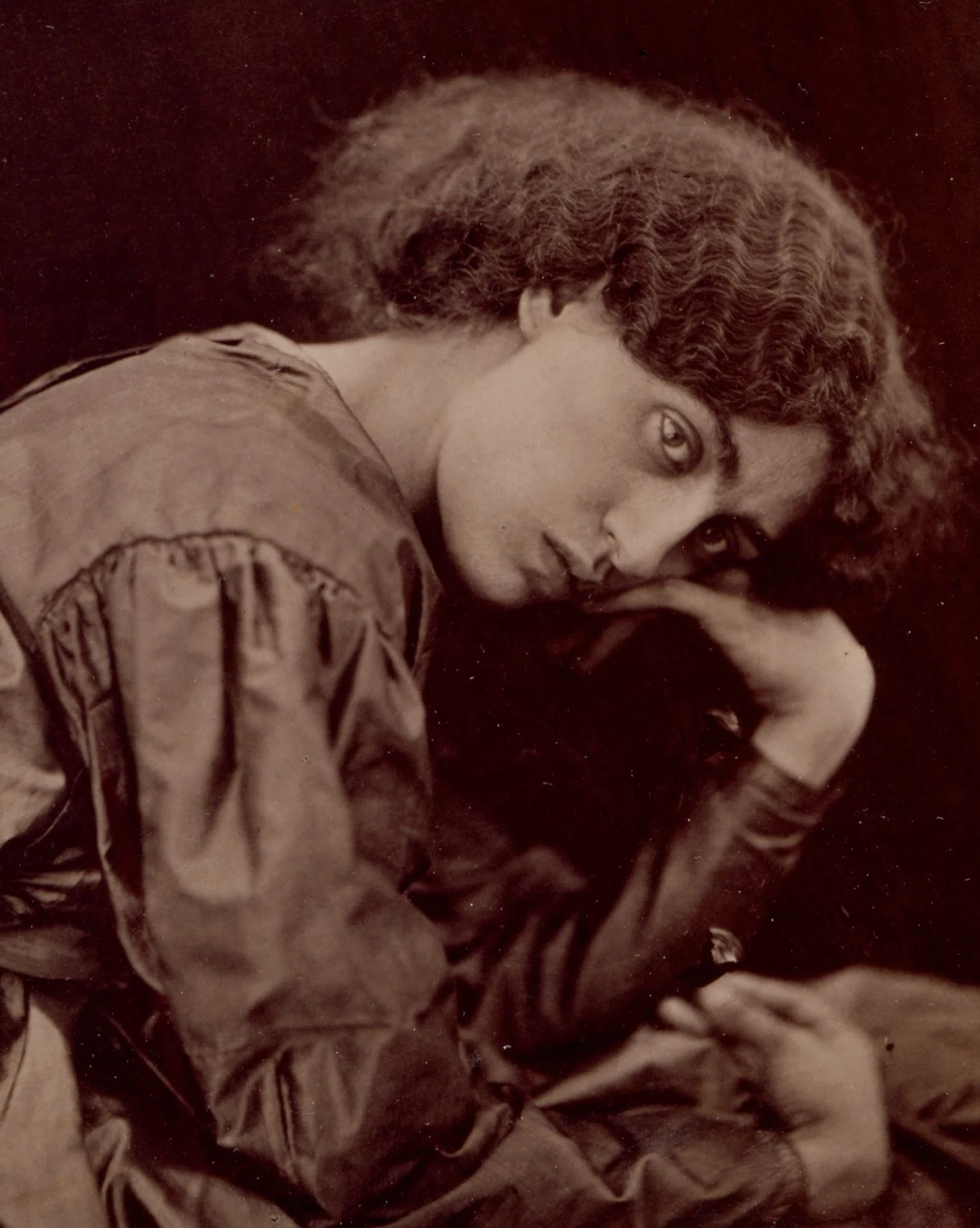
Who were the Pre-Raphaelites
A brotherhood of seven young artists, founded in London in 1848. Their manifesto: a break with the academic tradition descending from Raphael — a return to the clarity of the early Italian Renaissance.
Rossetti was one of the seven founders. Morris never joined the brotherhood, but by the late 1850s he had aligned himself with its second generation, carrying Pre-Raphaelite ideas into the decorative arts.
Their models: red-haired women with long necks. Jane Burden would become the “last” of them.
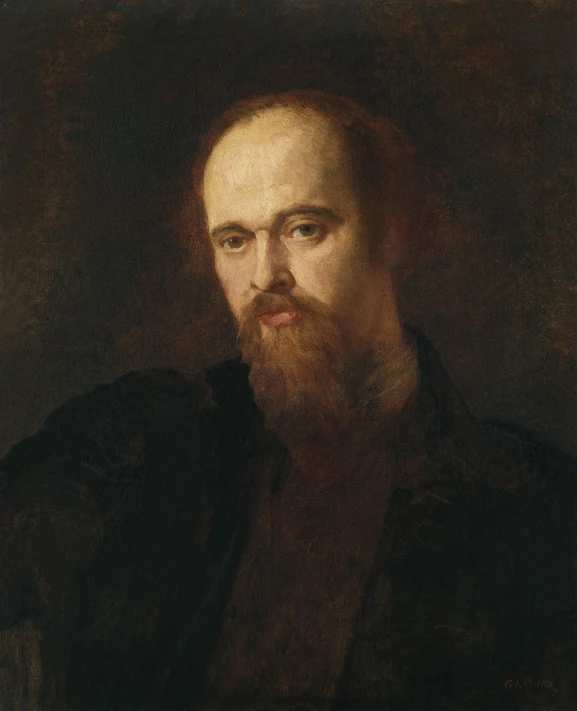
Rossetti
A founder of the Pre-Raphaelite Brotherhood. Painter and poet, son of an Italian émigré. After the death of his wife Elizabeth Siddal, he painted Jane’s portrait for twenty years. Died at 53.
Rossetti · 1828 — 1882 · painter and poet
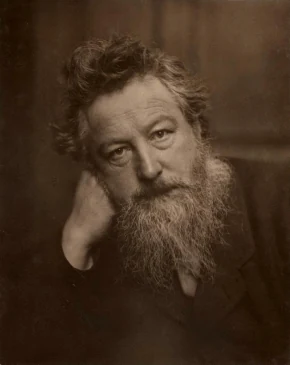
Morris
Poet, designer, socialist. The second generation of the Pre-Raphaelite circle, founder of the Arts and Crafts movement. Jane’s husband from 1859. His firm Morris & Co. would shape the face of Victorian aesthetics for decades.
Morris · 1834 — 1896 · designer, husband
One paints her, the other marries her
In October 1857 in Oxford, Rossetti and Morris meet Jane at the same time. Morris marries her a year and a half later. Rossetti will paint her portrait until his own death.
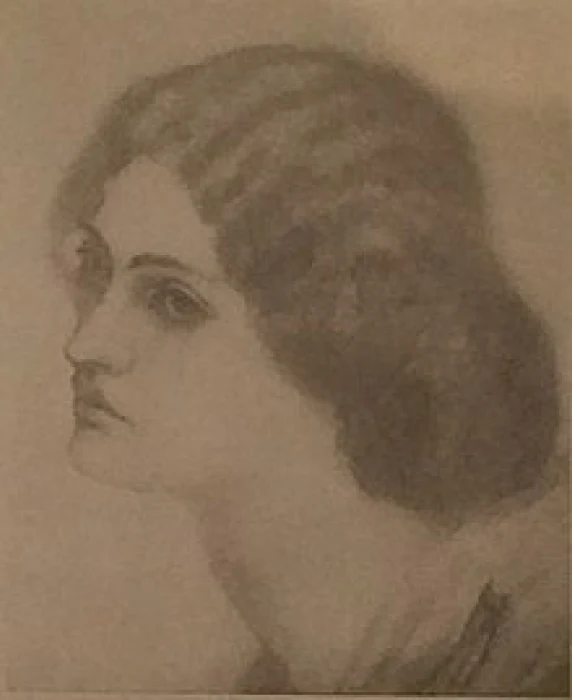
Pencil study of Jane
One of the earliest drawings of Jane, made soon after the Oxford meeting. The attribution is uncertain — the style is close to Rossetti’s.
Jane Burden · pencil study · c. 1858
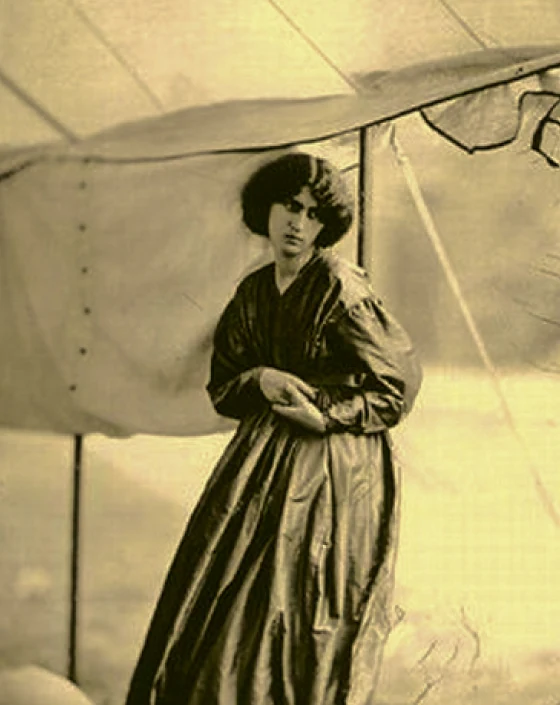
Jane in Rossetti’s garden
By twenty-six, Jane had been completely transformed: two languages, the manners of an aristocrat, her place in Morris & Co. This sepia is from the Parsons series commissioned by Rossetti.
Jane Morris · photograph by Parsons · 1865
The Pre-Raphaelites did not see a servant girl — they saw a model. Among them was William Morris: he painted her as Queen Guenevere and once left on the back of the canvas: “I cannot paint you, but I love you.”
Morris proposed. Jane accepted — she would later admit it wasn’t out of love: the alternative was the life of a laundress. After the engagement came private tutoring: French, Italian, piano, manners. Those who knew her said she came to carry herself “like a queen.” The wedding was in April 1859. Two years later Jenny was born, and a year after that — May.
The last muse
After his first wife’s death, Rossetti turned to Jane — and painted her for twenty years, until his own death. Those years stayed hidden behind her marriage to Morris.
1862
11 February — Elizabeth Siddal, Rossetti’s first wife, dies of a laudanum overdose. Rossetti collapses into a depression that lasts years. He will return to work with Jane only in 1865.
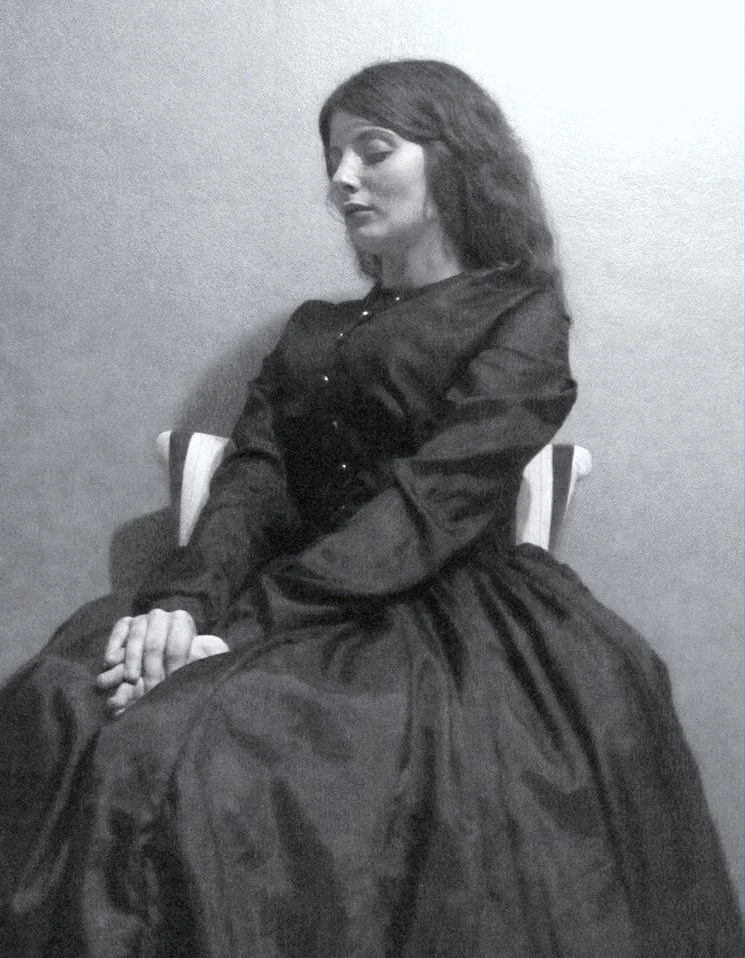
Elizabeth Siddal
Poet and painter, Rossetti’s first wife. Tubercular. Rossetti buried the manuscript of his poems in her coffin — and seven years later asked for it to be exhumed.
Elizabeth Siddal · 1829 — 1862
1868
By 1868 Rossetti has painted “Reverie” — the first in a long series of Jane’s portraits. Until his death in 1882, she will be the principal model in most of his paintings.
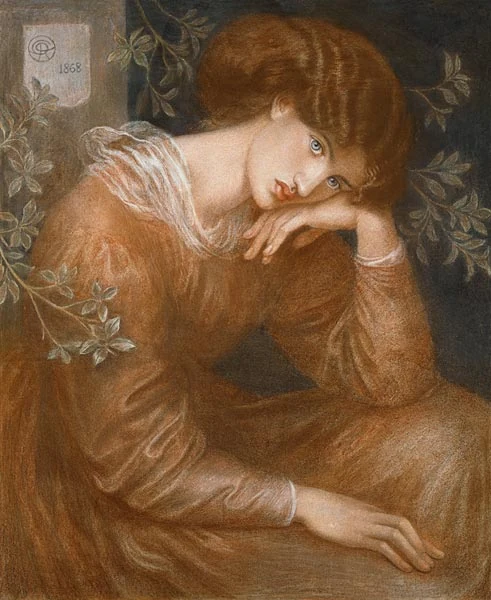
Reverie
The first portrait of Jane after Rossetti’s long mourning. The turning point — from now on he paints only her, and will go on doing so until his last days.
Reverie · Rossetti · 1868
1871
William Morris leaves for Iceland for four months, letting his wife and Rossetti spend the summer at Kelmscott. Morris: “Jane is not my property; I do not wish to deny her any source of happiness.”
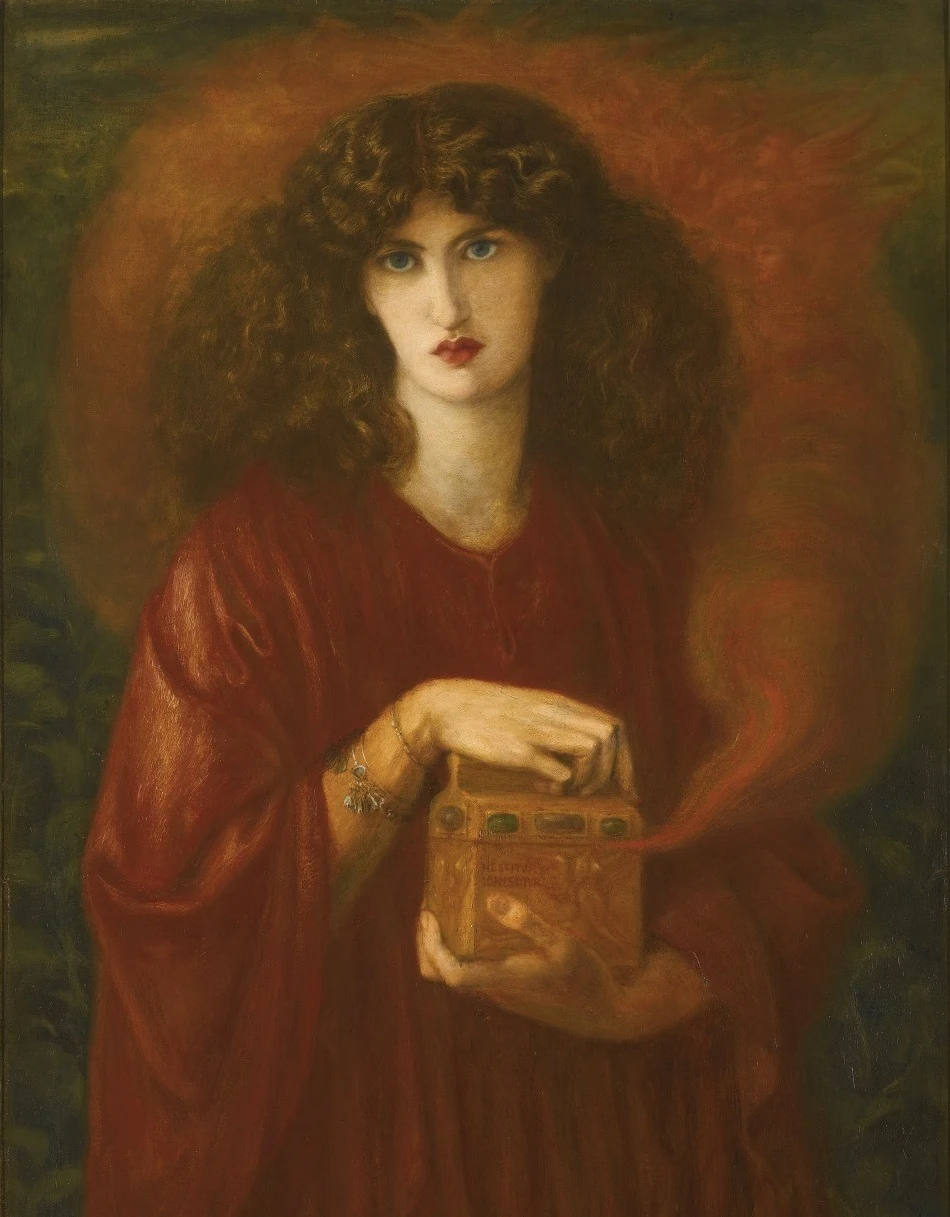
Pandora
Painted at Kelmscott Manor in the summer of 1871. Jane as Pandora — the one who opens the box of all the world’s evils.
Pandora · Rossetti · 1871
1872
Anonymous attacks on Rossetti’s poetry appear in the Contemporary Review. Nervous breakdown, attempted suicide. As his health worsens, his dependence on her deepens.
“That face was made to kindle the fire of his imagination and quicken his powers — a face full of mysterious and inexpressible meaning.”
William Michael Rossetti, the painter’s brother
1877—82
Another nervous breakdown for Rossetti. Jane breaks with him for good. He lives out his last years as a recluse at the seaside resort of Birchington-on-Sea. The friendly correspondence continues until his death on 9 April 1882.
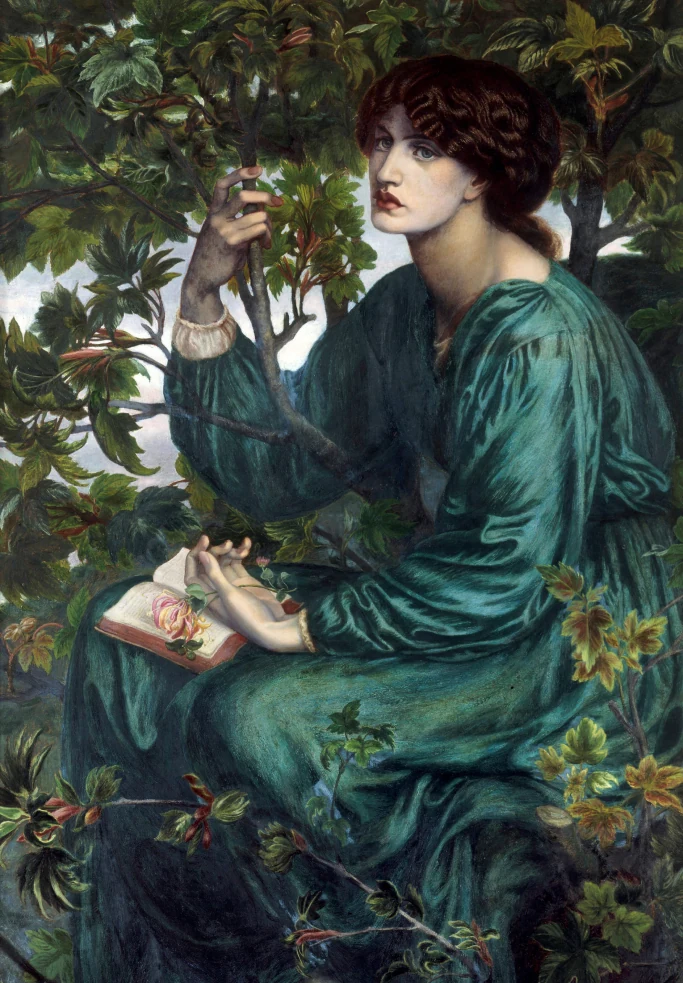
The Day Dream
The last major portrait of Jane by Rossetti. Finished two years before his death. Jane in a green dress on a seat of branches, a sprig of honeysuckle in her hand.
The Day Dream · Rossetti · 1880
Her beauty is genius.
Dante Gabriel Rossetti · “The House of Life”, sonnet XCV
Jane was a skilled embroiderer. In the first years of their marriage at Red House, she and William worked side by side: he drew the patterns, she stitched them. The first fabrics of Morris, Marshall, Faulkner & Co. were made by her hands.
A hundred years later these panels were found in the attic at Kelmscott Manor — lining a dog basket. Today they are on display in the house.
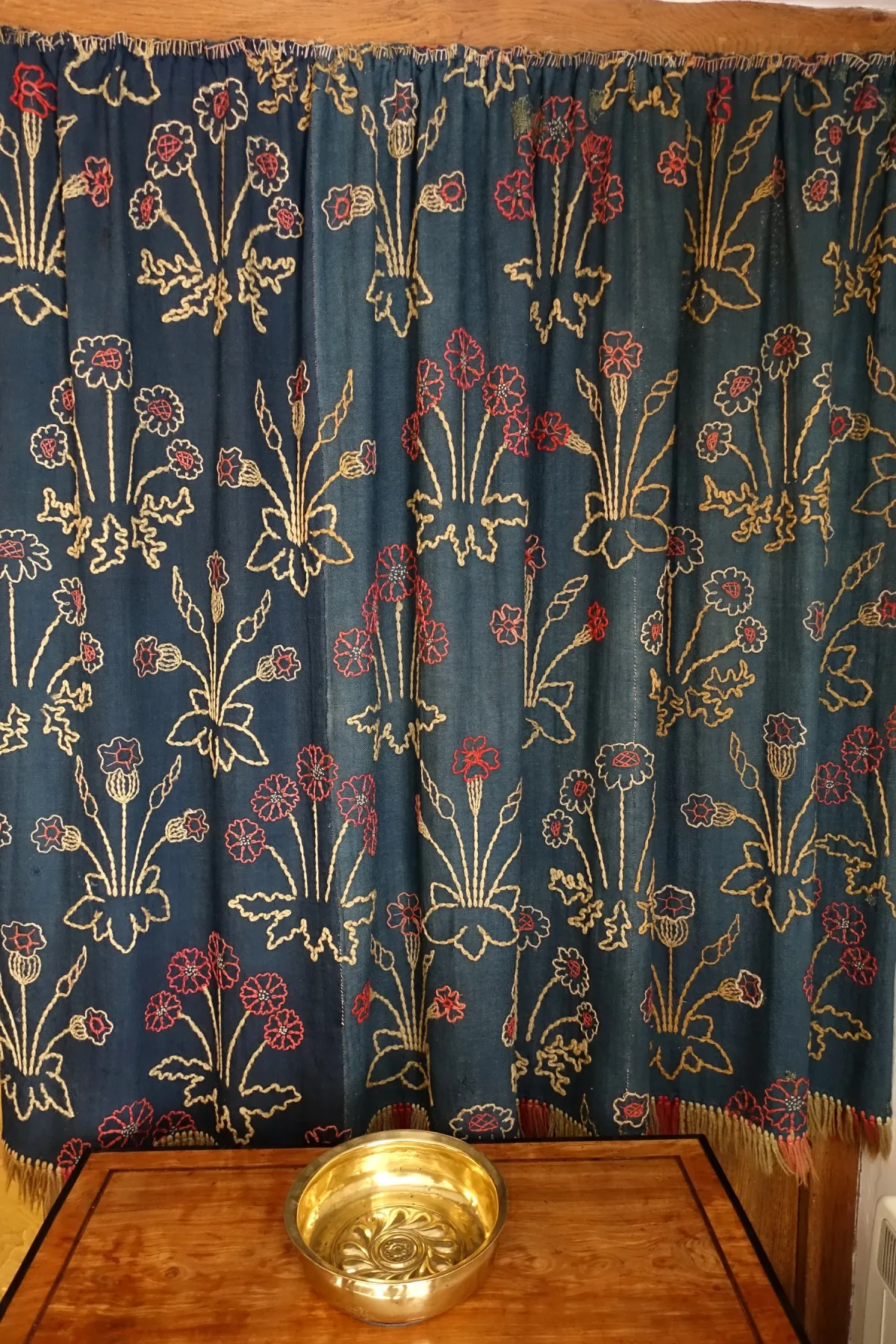
Daisy wall hangings
Couched wools on woollen serge — the earliest surviving work by Jane as an embroiderer. A hundred years later the panels were found in the attic at Kelmscott Manor, lining a dog basket.
Daisy wall hangings · embroidered by Jane Morris from William’s design · 1860 · Kelmscott Manor
In 1896 Jane buried William. They had two daughters: the elder, Jenny, suffered from epilepsy and stayed with her mother; the younger, May, inherited the talents of both parents.
From the age of twenty-three, May ran the embroidery department at Morris & Co. Her own designs — wallpapers, fabrics, jewellery — were attributed to her father for decades. In 1907 she founded the Women’s Guild of Arts: the Art Workers’ Guild did not admit women. After her mother’s death in 1914 she edited the Collected Works of William Morris in twenty-four volumes — and became, for decades to come, his foremost interpreter.
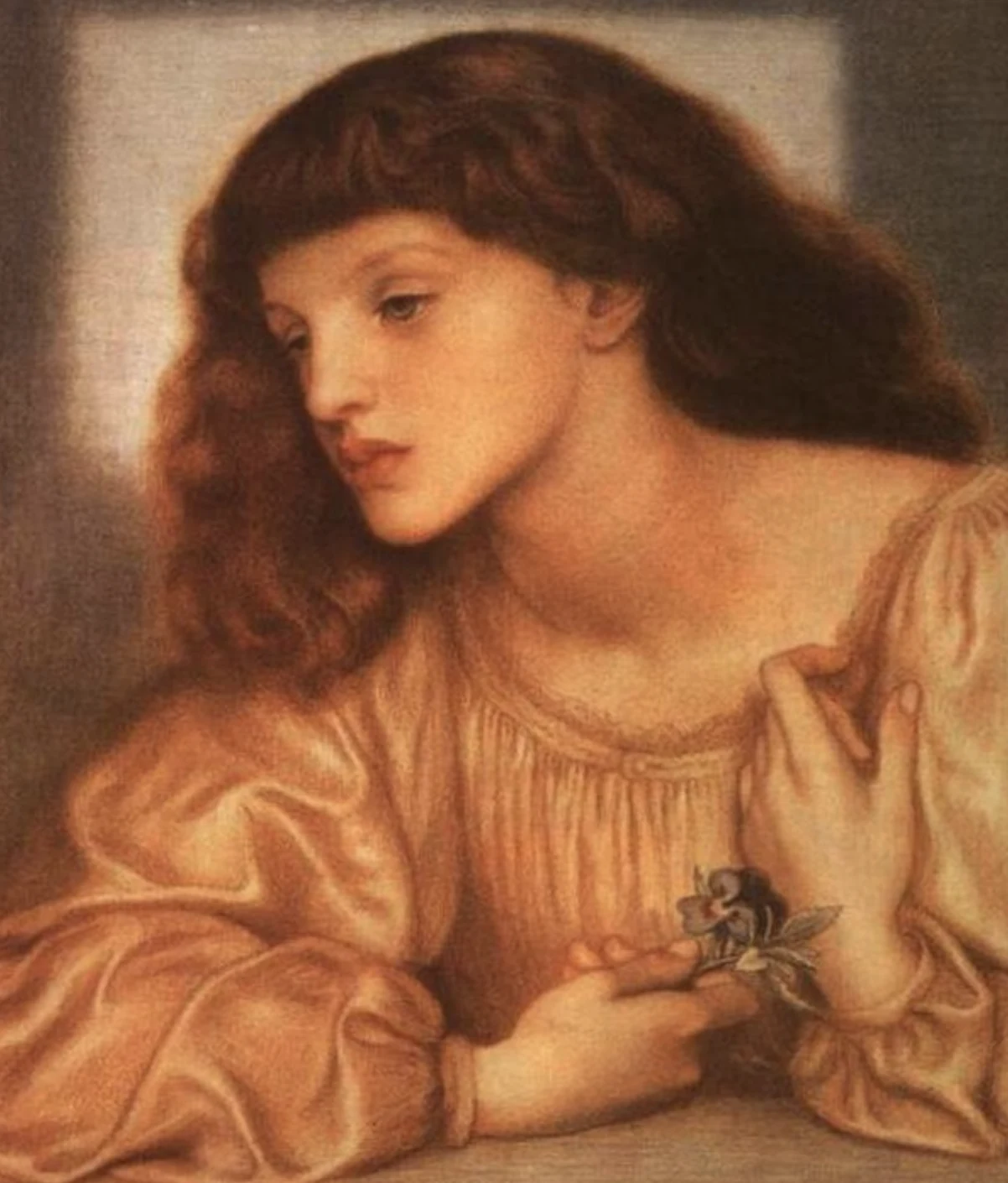
May Morris, aged ten
Jane’s younger daughter grew up among the Pre-Raphaelites. She would lead the embroidery department at Morris & Co. at twenty-three, become an artist in her own right, found the Women’s Guild of Arts, and edit her father’s Collected Works.
May Morris · aged ten · painted by Rossetti · 1872
Jane died on 26 January 1914 in Bath, at 5 Brock Street. She was seventy-four.
For twenty-five years she was painted by the finest artists in England.
All the while she learned languages, played the piano, embroidered, raised two daughters. She outlived Morris by eighteen years, Rossetti by thirty-two. By the time of her death, the Pre-Raphaelites were gone: the Brotherhood, the generation, all of it. Of all their muses, Jane was the last to leave — and she stayed on their canvases.
1839 — 1914
Muses is an independent editorial and educational project. Non-commercial use. All photographs are the property of their respective rights holders.
Sources: Wikimedia Commons (public domain), The Andy Warhol Foundation for the Visual Arts, Nat Finkelstein Estate, Smithsonian National Portrait Gallery, Minnesota Historical Society, F. Scott Fitzgerald Archives.
Images used for editorial commentary on cultural figures. For attribution or takedown requests: hello@slowread.art.